
Description
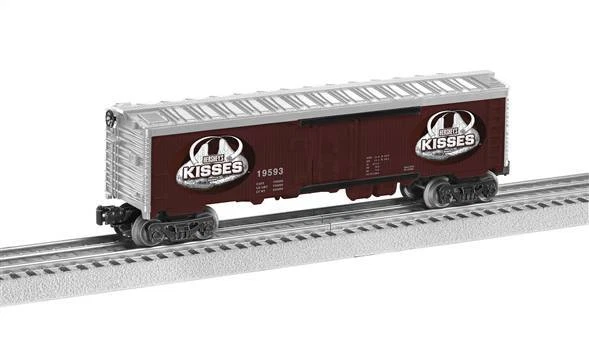
Lionel Hersheys Kisses Wood-Sided Reefer 6-19593. A collectible Reefer Cars item from Lionel. If you are looking for lionel hersheys kisses wood sided reefer, this is the one to grab while it is still available. Full details and specifications from the original listing follow below.
Lionel Hersheys Kisses Wood-Sided Reefer 6-19593: Product Details
Lionel Hersheys Kisses Wood-Sided Reefer 6-19593
THE HERSHEY COMPANY COLLECTION With a history lasting over a hundred years, The Hershey Company has grown to include some of the most well known brands in the world. Sweeten your train layout with these new colorful and collectible freight cars spotlighting The Hershey Company. Die-cast metal sprung trucks and operating couplers Opening doors Gauge: Traditional O Gauge Dimensions: Length: 11 Inches RailLine: Hersheys Minimum Curve: O-27 Lionel 2011 Ready-To-Run
About Reefer Cars
Shop Reefer Cars: collectible reefer cars for sale, including Lionel Hersheys Kisses Wood-Sided Reefer 6-19593. New and factory-sealed finds, fair prices, and fast shipping.
About Lionel
Lionel model trains: O gauge boxcars, reefer cars, Christmas trains and accessories from America's classic train maker, including Disney and collector editions.
A reefer is a refrigerator car, the insulated freight car railroads used to move perishable food and drink across the country. Before mechanical refrigeration, reefers were packed with ice, and their sides became rolling billboards: breweries, meat packers, dairies and candy companies painted their names and products on the cars that carried their goods, which is why advertising reefers are such a rich corner of the hobby. Wood-sided reefers carry the look of that earlier era, with vertical boarding and period lettering, while modern reefers wear the cleaner schemes of later decades. Lionel and MTH both returned to the advertising reefer again and again because the format suits a model perfectly: four long sides for artwork, a recognisable silhouette, and a cargo story built into the car itself. A reefer lettered for a famous food or drink brand therefore works on two levels at once, as a working piece of O gauge rolling stock for a freight train, and as a piece of vintage style advertising for a brand with its own collectors who may never run a train at all.
This is an O gauge Lionel product, built for the three-rail track system that has defined Lionel trains since the middle of the last century. Traditional O gauge cars run on O-27 curves and wider, and the specifications in the listing above, including the minimum curve and the car’s length, are the measurements layout builders use to confirm a car will clear their curves and match the proportions of the rest of a consist. Lionel freight cars of this period are known for their die-cast metal sprung trucks, which put real weight low in the car and help it track steadily, and for operating couplers that let the car connect and release within a working train rather than sitting as a static model. Opening doors on boxcars and reefers are another Lionel signature, letting the car be posed in a yard or loading scene. The catalog references in the listing place the car in Lionel’s Classic Trains era output of the early 2000s, a period when the company leaned heavily into licensed themes, colourful special-run freight cars and collector oriented releases alongside its traditional road name equipment.
A boxcar is the enclosed freight car that carried general cargo on North American railroads for more than a century, protected from weather by its roof and sliding doors. Model boxcars follow the same logic as the real cars: the body carries the railroad name, the character artwork or the advertising scheme, the doors open on cars equipped for it, and the trucks and couplers at each end do the mechanical work. On a layout, boxcars are the backbone of a freight consist because real railroads mixed them by the dozen behind one locomotive, so a collector can run several different Lionel boxcars together and still be modelling something the prototype did every day. Special-run boxcars like the ones Lionel issued for dealers, toy fairs, holidays and licensed themes were produced in smaller numbers than regular catalog cars, and they were bought as much for the artwork and the occasion they marked as for operation. The product number in the title, in Lionel’s six series numbering, is the identifier collectors use to catalogue the car and to distinguish it from the many other boxcars Lionel released in the same years.


Reviews
There are no reviews yet.